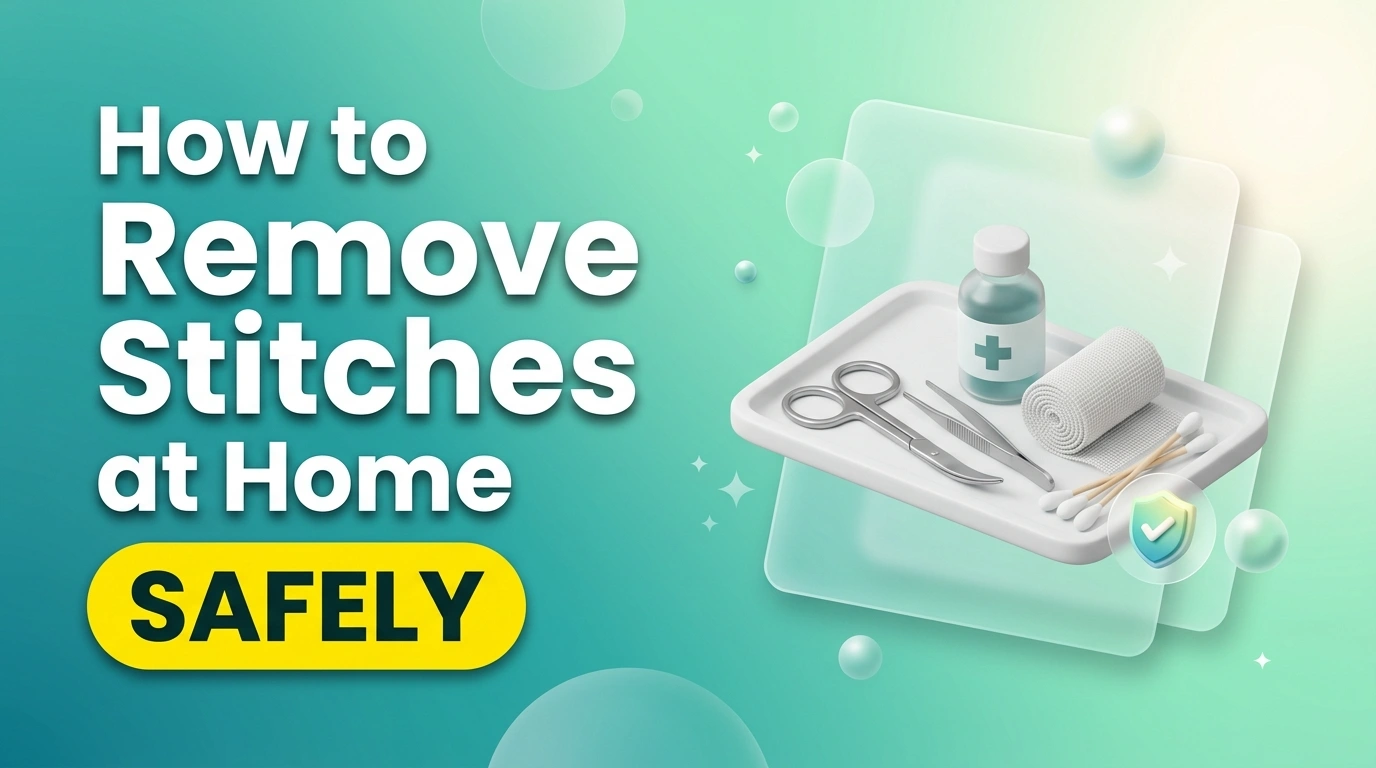
You can remove stitches at home only if the wound is fully healed, shows no infection signs, and your doctor approves. Use clean, disinfected tools and stop if anything looks wrong. This guide covers the safe method step by step.
Medical disclaimer: this article is for information only and is not medical advice. Removing stitches yourself carries risks. When in doubt, let a healthcare professional do it.
When It Is Safe (and When It Is Not)
Home removal is only reasonable for simple, well-healed wounds with your doctor’s okay. Many clinics actually encourage it for straightforward cases to save you a visit.
Safe to consider: wound fully closed, no redness or swelling, past the recommended removal time, and your doctor said self-removal is fine.
Do NOT do it yourself: dissolvable stitches (they vanish on their own), face or cosmetic wounds, deep or surgical wounds, any sign of infection, or if you feel unsure.
How Long Stitches Usually Stay In
Timing depends on where the wound is. These are general ranges only. Always follow your own doctor’s guidance.
Face: 3 to 5 days
Scalp: 7 to 10 days
Arms: 7 to 10 days
Legs: 10 to 14 days
Hands and feet: 10 to 14 days
Chest, back, and joints: 10 to 14 days
Removing stitches too early can reopen the wound. Leaving them too long lets skin grow around the thread, making removal harder.
What You Need
Small sharp scissors or suture scissors, disinfected
Fine-point tweezers, disinfected
Rubbing alcohol or antiseptic wipes
Antibacterial soap and clean water
Antibiotic ointment and adhesive bandages
Good lighting, plus a magnifying glass for tiny stitches
How to Remove Stitches at Home: Step by Step
Confirm with your doctor. Before anything else, make sure self-removal is appropriate for your wound. Ask about the right timing and any risks specific to your case.
Wash your hands thoroughly. Scrub with antibacterial soap and warm water for at least 20 seconds. You can also wear clean disposable gloves.
Disinfect your tools. Soak the scissors and tweezers in boiling water for up to 20 minutes, or wipe them thoroughly with rubbing alcohol. Let them dry on a clean paper towel. Note: boiling disinfects but does not fully sterilize, so handle tools with clean hands only.
Clean the wound area. Gently wash the skin around the stitches with antiseptic or an alcohol wipe. This lowers the infection risk before you start.
Set up good lighting. Sit somewhere bright where you can see every stitch clearly. If the wound is hard to reach, ask someone to help.
Count your stitches. Count them before you start so you can confirm every single one comes out later.
Lift the knot. With the tweezers, gently pull the knot upward, just enough to see the thread loop near the skin.
Cut one side only. Slide the scissor blade under the loop and snip once, close to the skin. Never cut both sides, because the middle piece could slip under the skin and get trapped.
Pull gently toward the wound. Grip the knot with tweezers and slide the thread out in the direction of the wound line. It should come out easily. Do not drag the dirty outside portion back through the skin.
Repeat for each stitch. Work through them one at a time. If you feel resistance or sharp pain, stop and call your doctor.
Clean and protect. Wipe the area with antiseptic, apply a thin layer of antibiotic ointment, and cover with a bandage. Keep it clean for a few days.
How to Tell If Your Wound Is Fully Healed
Before removing a single stitch, check the wound carefully. The skin edges should be fully joined with no gaps or openings along the line.
Healthy healing skin looks pink and closed, possibly with light scabbing. There should be no spreading redness, no swelling, no warmth, and no fluid leaking out. If the area still looks raw or pulls apart when you move, it is not ready.
When in doubt, wait and ask your doctor. An extra day or two of patience is always much safer than removing stitches from a wound that is not ready.
Warning Signs: Stop and Call Your Doctor
Bleeding that does not stop quickly
The wound opens after a stitch comes out
Spreading redness, warmth, or swelling
Pus or unusual drainage
Sharp or increasing pain
A stitch that will not budge or feels stuck
If any of these happen, stop immediately, cover the wound, and contact your doctor or urgent care.
Aftercare for the Healed Wound
The skin is still delicate after stitches come out. Avoid heavy lifting, stretching, or sports that pull on the area for at least a week.
Keep the area clean and moisturized to support healing and reduce scarring. Once fully closed, gentle sunscreen on the scar helps it fade more evenly over the following months.
Common Mistakes to Avoid
Using dull household scissors: dull blades tug and can reopen the wound. Use sharp, disinfected tools only.
Skipping disinfection: dirty tools invite infection. This step is never optional.
Pulling the knot through: always cut first, then pull. Dragging the knot through skin is painful and can cause bleeding.
Removing stitches too early: impatience risks wound reopening. Wait for the right time window.
Not counting stitches: a leftover fragment under the skin can cause infection. Count before and after.
People Also Ask
Is it okay to remove your own stitches?
Sometimes. For simple, fully healed wounds with your doctor’s approval, self-removal is generally safe. For face wounds, deep wounds, or any complications, see a professional.
Does removing stitches hurt?
Usually not much. Most people feel slight tugging or pressure. Sharp pain is a warning sign, so stop and call your doctor if it hurts.
What happens if stitches are left in too long?
Skin can grow over the thread, making removal harder and more uncomfortable. Very old stitches may also leave more noticeable track marks or scars.
Can I remove stitches after 7 days?
It depends on the location. Seven days is typical for arms, but legs need 10 to 14 days, while face stitches come out sooner and joint stitches later. Confirm the timing with your doctor.
What should I put on the wound after removing stitches?
Clean with antiseptic, apply a thin layer of antibiotic ointment, and cover with a bandage. Keep the area clean and watch for infection signs for several days.
How do I know if my stitches are dissolvable?
Ask your doctor. Dissolvable stitches break down on their own over weeks and should never be pulled out. If you are unsure what type you have, do not attempt removal.
What if a stitch breaks during removal?
Stop and call your doctor. A broken thread can leave a fragment under the skin. Do not dig for it yourself.
Can I shower after removing stitches?
Yes, gently. Brief showers are fine once stitches are out, but avoid soaking the wound in baths or pools until it is fully sealed.
Will removing stitches leave a scar?
The wound itself determines most scarring, not the removal. Keeping the area moisturized and protected from sun once healed helps scars fade faster.
What if my wound reopens after I remove a stitch?
Stop immediately. Apply gentle pressure with a clean bandage and call your doctor right away. Do not try to close it yourself.
Conclusion
How to remove stitches at home safely comes down to three things: doctor’s approval, disinfected tools, and knowing when to stop. Every stitch should slide out easily. If anything resists, bleeds, or looks wrong, that is your signal to call a professional.
Done carefully, it is a simple task. Done carelessly, it is an infection risk. Choose careful, and give your body the respect it deserves while it heals.
I am Sylas Thorne, a creative storyteller and content writer who brings ideas to life through powerful and engaging words.
I blend strategy with originality to craft content that informs, inspires, and leaves a lasting impression.
Visit textzhub.com to explore my work, where every piece is written with purpose and creativity.