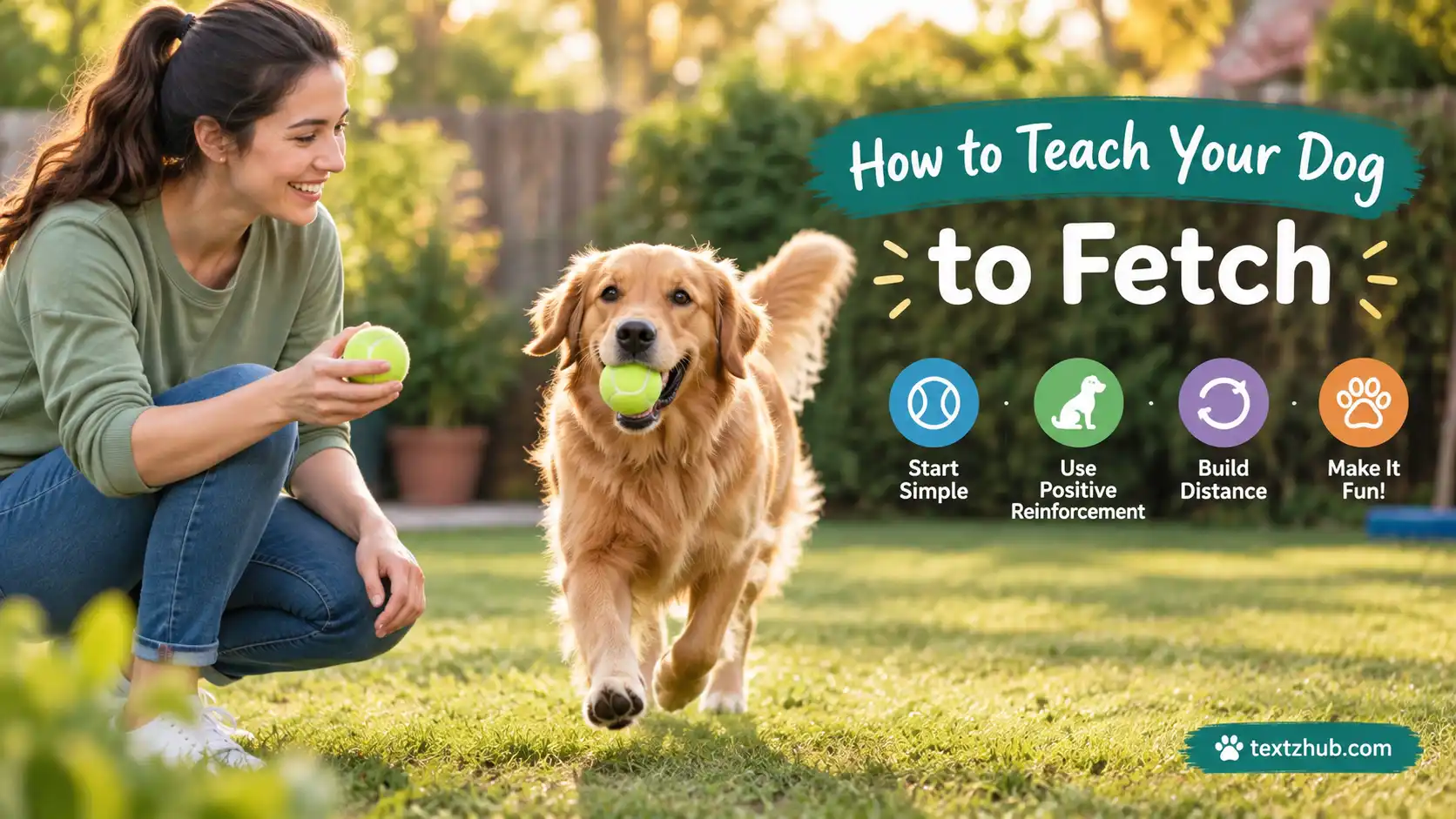
Teach your dog to fetch by breaking the game into small steps: chase, pick up, come back, and drop. Most dogs learn the basics in one to two weeks of short daily sessions. This guide shows you exactly how.
What You Need to Get Started
A toy your dog loves: a ball, rope toy, or soft disc. Pick something easy to carry and safe to chew.
Small training treats: pea-sized, smelly treats work best as high-value rewards.
A quiet space: start indoors or in a fenced yard with few distractions.
5 to 10 minutes: keep sessions short and fun. End while your dog still wants more.
How to Teach Your Dog to Fetch in 7 Steps
Build toy interest first. Before any throwing, make the toy exciting. Wave it around, play a little tug, and praise your dog for grabbing it. A dog that loves the toy will want to chase it.
Teach “take it” and “drop it.” Hold the toy out and reward your dog for taking it in their mouth. Then offer a treat and say “drop it” as they release. Practice until both feel easy, because these two cues are the foundation of fetch.
Reward picking it up. Place the toy on the floor a foot away. The moment your dog picks it up, praise and treat. You are teaching them that grabbing the toy earns good things.
Toss it a short distance. Throw the toy just 3 to 5 feet away and say “fetch” or “get it.” Keep it easy so your dog succeeds. Celebrate wildly when they grab it.
Call them back. As your dog picks up the toy, say “come” in a happy voice and back up a few steps. Most dogs will follow you with the toy. Reward the return generously.
Ask for the drop. When your dog arrives, offer a treat and cue “drop it.” The instant the toy leaves their mouth, reward and throw again. The game continuing becomes the real prize.
Increase distance gradually. Once the short game is smooth, throw a little farther each session. Never jump from 5 feet to 50. Slow progress keeps your dog confident and successful.
Troubleshooting Common Fetch Problems
My dog chases the toy but will not bring it back
Try the two-toy game. Throw the first toy, and as your dog reaches it, tease them with a second toy. They will usually run back toward you, toy in mouth, to chase the new one. Repeat until bringing the toy back becomes habit.
My dog will not drop the toy
Go back to practicing “drop it” separately with treat trades. Never chase your dog or pry the toy from their mouth, because that teaches them to run away with it. Make giving the toy up the best deal in the world.
My dog is not interested in the toy at all
Try a different toy. Some dogs love squeakers, others prefer rope or soft discs. You can also stuff treats inside a toy to build interest, or try the tug-and-reward method: play tug for a few days, then toss the toy mid-game.
My dog gets bored after two throws
You are probably training too long. Keep sessions under 5 minutes and always stop before your dog loses interest. Put the special fetch toy away between sessions so it stays exciting and novel.
Fetch Safety Rules
Warm up first: a quick walk before intense fetching protects joints and muscles, especially in puppies and seniors.
Avoid sticks: they can splinter and injure your dog’s mouth. Use proper dog toys instead.
Watch the heat: on hot days, fetch on grass instead of pavement and bring water.
Know when to stop: heavy panting, slowing down, or limping means game over for today.
Common Mistakes to Avoid
Throwing too far too soon: long throws overwhelm beginners. Master short distances first.
Chasing your dog: running after them turns keep-away into the game. Always make coming to you the winning move.
Skipping “drop it”: without a reliable drop, fetch falls apart. Teach it before you need it.
Training when frustrated: dogs read your mood. If you are annoyed, stop and try tomorrow.
Using punishment: scolding a dog for not fetching kills their motivation. Reward what you like and ignore the rest.
Pro Tips for Faster Results
Use a hallway: a narrow hallway limits escape routes, so your dog naturally comes back to you with the toy.
Be more exciting than the toy: high-pitched praise, clapping, and happy movement make you the best part of the game.
Train before meals: a slightly hungry dog works harder for treats.
Add a “wait” cue: once fetch is solid, ask your dog to wait before chasing. This builds impulse control and makes the game more fun.
How Often Should You Play Fetch?
For most adult dogs, 10 to 15 minutes of fetch once or twice a day is plenty. Puppies need even less: a few short rounds are enough for young joints.
Fetch is high-impact exercise, so give rest days or mix in calmer activities like sniff walks. A tired dog is a happy dog, but an overworked dog gets injured.
People Also Ask
How long does it take to teach a dog to fetch?
Most dogs learn the basics in one to two weeks of short daily sessions. Some natural retrievers get it in days, while independent breeds may take a month. Consistency matters more than speed.
What age should you teach a puppy to fetch?
You can start as early as 8 to 10 weeks with very short, gentle sessions. Keep throws tiny and always end on a win. Avoid hard running and jumping until your puppy’s joints mature.
Why does my dog not like fetch?
Not every dog loves fetch, and that is perfectly fine. Some breeds are not natural retrievers, and some dogs simply prefer sniffing, tugging, or puzzle toys. Try different games instead of forcing it.
Should I use a clicker to teach fetch?
A clicker helps, but it is optional. What matters is marking the exact moment your dog does the right thing, whether with a click or a cheerful “yes.” Timing beats tools.
Can old dogs learn to fetch?
Yes. Senior dogs can learn fetch at any age. Just keep throws short, play on soft ground, and watch for stiffness. It is great gentle exercise for older dogs.
How do I stop my dog from playing keep-away?
Never chase them. Turn away, go quiet, or end the game. Then restart using the two-toy method so returning to you always pays off better than running away.
Is fetch good exercise for dogs?
Excellent exercise. Fetch provides running, mental stimulation, and bonding in one game. Just balance it with sniff walks, since sprinting alone does not tire a dog’s brain the way scent work does.
What is the best toy for teaching fetch?
The best toy is whatever your dog loves most. Tennis balls are classic, but soft rubber discs are gentler on teeth. Let your dog choose by offering options.
My dog fetches but will not play with other people. Why?
Your dog has learned that you are the fun part of the game. Have the other person start by giving all the treats during short sessions, and your dog will warm up to them.
Conclusion
How to teach your dog to fetch comes down to patience and tiny steps: build toy drive, teach the drop, start short, and celebrate every return. To fetch is a game, and games should be fun for both of you.
Keep sessions short, rewards generous, and your energy high. Before long, your dog will be dropping the ball at your feet and begging for one more throw.

I am Eryndor Vale, a seasoned content writer who brings depth, clarity, and creativity to every piece of writing.
I specialize in crafting engaging, well-researched content that connects with readers and delivers real value.
Through my work at textzhub.com, I turn ideas into impactful stories that inform, inspire, and engage.