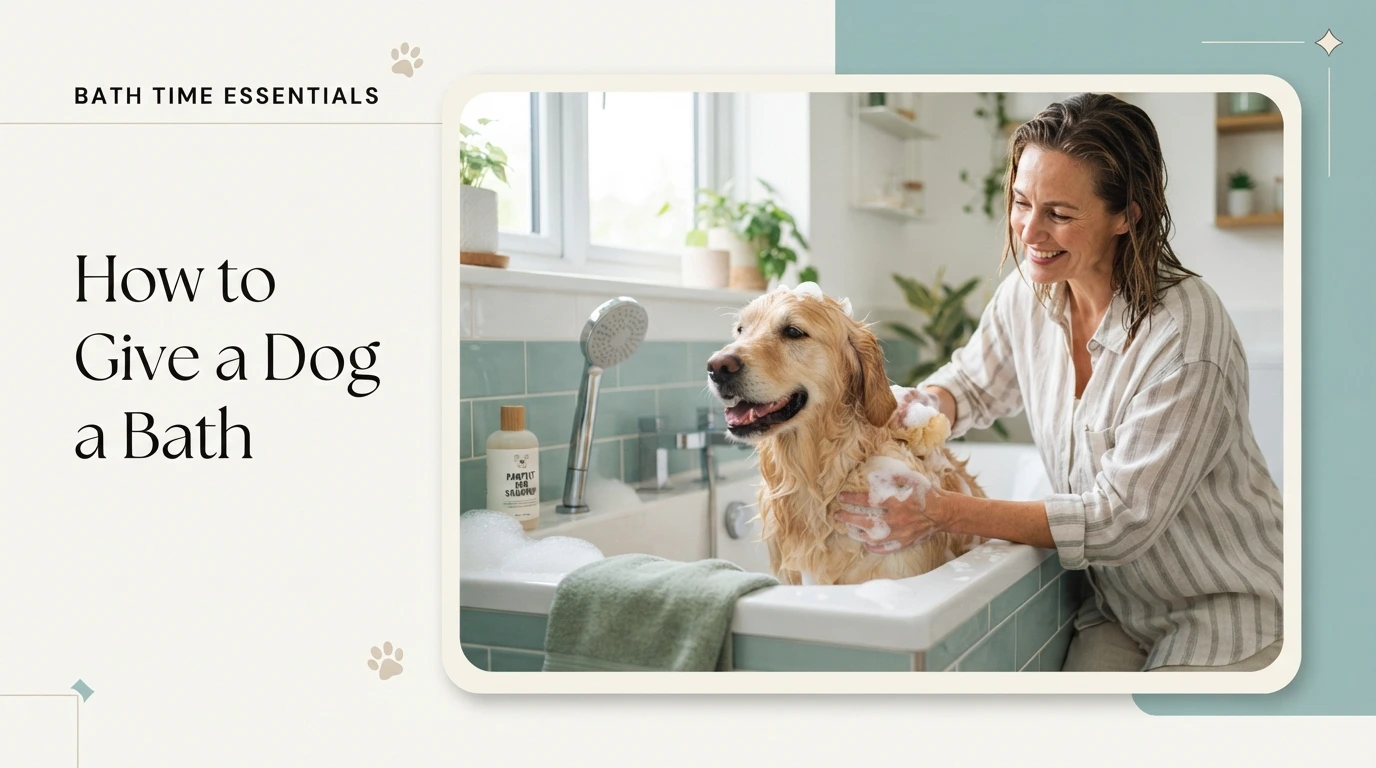
Most dogs need a bath every 4 to 6 weeks. The right timing depends on your dog’s coat type and daily lifestyle.
Short coats (Labs, Boxers)Every 4 to 6 weeks
Double coats (Huskies, Goldens)Every 6 to 8 weeks
Oily coats (Bulldogs, Bassets)Every 2 to 4 weeks
Active or outdoor dogsWhen visibly dirty
Avoid over-bathing. Washing too often strips natural oils and leads to dry, itchy, flaky skin. For double coats, longer gaps also protect the natural insulation.
What You’ll Need Before You Start
The secret to a smooth dog bath isn’t skill. It’s preparation. Gather every supply before you turn on the water. Once your dog is wet and slippery, you don’t want to sprint across the house for a forgotten towel.
Core supplies (non-negotiable)
Dog-specific shampoo. Never human shampoo. It’s made for a different skin pH and can dry out and irritate your dog’s skin.
Several towels. More than you think you’ll need. Thick-coated dogs soak up a lot of water.
A brush suited to your dog’s coat for the pre-bath brush-out.
Cotton balls to gently block water from your dog’s ear canals.
Comfort and safety extras
A non-slip bath mat. A slippery tub is one of the fastest ways to spook a dog mid-bath.
Treats or a lick mat. A simple distraction that turns bath time into something your dog looks forward to.
A washcloth for cleaning around the face without getting shampoo near the eyes.
Conditioner or detangling spray, especially useful for long or double coats.
Pro tip: Lay everything out within arm’s reach of the tub, sink, or outdoor bathing spot before your dog gets near the water. This one habit, full prep before you start, prevents a stressful bath better than almost any technique that follows.
Step-by-Step: The Full Bathing Process
Once your supplies are ready, the bath itself comes down to seven simple steps.
Step 1: Brush first
Remove loose hair, tangles, and debris before your dog gets wet. Wet knots only tighten and become harder to work out.
Step 2: Wet the coat correctly
Start at the neck and work backward with lukewarm water. Test it on your wrist first. Water that’s too hot or too cold can startle your dog and cut the bath short.
Step 3: Apply shampoo and let it sit
Work a dog-specific shampoo into a lather, covering the whole body, including the belly and between the toes. If it’s a specialty or medicated formula, let it sit for a few minutes.
Step 4: Rinse until the water runs clear
This is the step most people rush, and the one that matters most. Leftover shampoo residue is a common cause of itchy, irritated skin.
Step 5: Clean the face carefully
Use a damp washcloth, not direct shampoo, and keep everything away from the eyes and ears.
Step 6: Towel-dry with a pat, not a rub
Rubbing tangles the coat and can irritate the skin underneath.
Step 7: Choose air-dry or low-heat blow-dry
Thick or double coats usually need a blow dryer on a low, cool setting to dry fully and avoid trapped moisture near the skin.
Calming an Anxious or Bath-Fearful Dog
Some dogs leap into the tub. Others treat bath time like a threat to their survival. If yours is in the second group, you’re not doing anything wrong. Some dogs are simply more sensitive to water, and the right approach makes all the difference.
1. Watch for the signs first
Panting, a tucked tail, wide eyes, or trying to bolt all signal that your dog is stressed, not stubborn. Spotting these early lets you slow down before things escalate.
2. Practice dry first
Before you add water, let your dog get comfortable standing in the empty tub. Reward calm behavior with treats. This removes the shock of “water plus a new space” happening all at once.
3. Use a lick mat as a distraction
Smear it with a pet-safe spread and stick it to the wall of the tub. A dog focused on licking is far less focused on panicking.
4. Keep your voice low and steady
Dogs pick up on tone far more than words. A calm, reassuring voice throughout the bath settles nerves better than almost anything else you can do.
5. Bring in a second pair of hands
One person bathes while the other comforts and holds the leash. This makes a real difference for dogs who struggle the most.
Patience pays off. Every calm bath makes the next one easier.
Bathing a Puppy for the First Time
Puppies need extra care and patience for their first bath. Some will treat it like a spa day. Others will act like you’re leading them to their doom.
Wait until they’re old enough
Most puppies don’t need a full bath until around 8 weeks old, unless they get especially dirty. Their bodies are still developing, and they can get cold quickly.
Keep the water gentle and warm
Use lukewarm water, not hot and not cold. Test it with your wrist. A handheld showerhead or cup helps you control the flow and avoid a scary blast.
Keep sessions short
Aim for 5 to 10 minutes at first. Puppies have short attention spans and even shorter patience. A quick, calm bath beats a long, stressful one.
Make it a positive experience
Use treats, a soothing voice, and lots of praise. Let your puppy sniff the tub and explore before you turn on the water. Never force them into the bath.
Choose a puppy-safe shampoo
Human shampoo can irritate a puppy’s sensitive skin. Use a gentle, puppy-formulated product with no harsh fragrances or chemicals.
Finish with praise
Wrap your puppy in a soft towel, dry them thoroughly, and reward them with a treat or playtime. The goal is to help them link bath time with good things.
Bathing a Senior or Arthritic Dog
An older dog’s body needs more consideration at bath time. Joints that once handled a bathtub easily may now make the whole process uncomfortable, so a few adjustments go a long way.
Prioritize a non-slip surface, no exceptions
A slick tub is risky for any dog, but for a senior with weaker joints, a single slip can cause real injury. A rubber mat or textured liner is essential, not optional.
Support their joints during positioning
Avoid asking your dog to stand for long stretches. If needed, help support their weight or let them sit rather than stand through the process.
Keep the bath shorter and gentler
Long baths are tiring for a senior dog. Move efficiently through the steps (brush, wet, shampoo, rinse, dry) without lingering longer than necessary.
Watch closely for discomfort or fatigue
Trembling, reluctance to shift position, or a dog trying to lie down mid-bath are signs to pause or wrap up early.
Warm the room, not just the water
Older dogs regulate body temperature less efficiently. A warm bathroom and a fast, thorough dry afterward help prevent chills.
Consider a helper
A second person to steady your dog or support their hindquarters reduces strain on both of you and makes the bath safer.
Bathing a senior dog isn’t about speed. It’s about comfort, safety, and dignity.
Bathing Large or Heavy Breeds You Can’t Lift
Not every dog fits neatly into a bathtub, and if you own a large or heavy breed, lifting them isn’t realistic or safe. The good news: you don’t need to.
Take it outdoors when the weather allows
A garden hose or outdoor faucet with a spray attachment works well for large dogs. It also means far less cleanup than an indoor bath gone messy.
Use a hose or shower attachment for better control
A handheld sprayer lets you direct water exactly where it’s needed (neck, belly, legs) without the awkward angles of a fixed showerhead.
Bring in a second person if your dog is strong or squirmy
One person washes while the other keeps your dog calm and in place. This matters most for dogs who try to shake or wander off mid-bath.
Secure them safely, not forcefully
A leash looped over a sturdy point, or a calm handler holding a loose lead, keeps a large dog from bolting without making the bath feel like a restraint.
Mind the water temperature outdoors
Hose water can run cold, especially early in the day. Let it run until it’s comfortably lukewarm before it touches your dog.
Time it for warm weather
Outdoor baths work best when the air is warm enough that your dog won’t get chilled while air-drying.
Short-Coat vs. Thick/Double-Coat Dogs
Coat type changes almost every step of the process, from how long shampoo needs to sit to how long your dog takes to dry.
Short coats (Labs, Beagles, Boxers, Dachshunds)
The process moves quickly. Water reaches the skin almost instantly, so soaking takes less time.
Shampoo needs less dwell time. A quick massage and lather is usually enough.
Drying is fast, often just a thorough towel-dry with no blow dryer.
Thick or double coats (Huskies, Golden Retrievers, German Shepherds, Chow Chows)
Brushing before the bath matters more here than almost anything else. A double coat traps loose undercoat hair, and skipping this step means a tangled, matted mess once wet.
Water and shampoo take longer to reach the skin, so don’t rush soaking or lathering.
Rinsing takes noticeably longer. Shampoo hides deep in the undercoat, and leftover residue is a common cause of skin irritation.
Drying is the biggest challenge. A thick coat can stay damp near the skin for hours. Use a blow dryer on a low, cool setting, section by section, to prevent trapped moisture, which can cause a musty coat or skin irritation.
Match your technique to your dog’s coat, and bath time gets easier and more effective for both of you.
Bathing an Outdoor or Extra-Muddy Dog
Some baths aren’t routine maintenance. They’re damage control after your dog found the muddiest spot in the yard. A muddy dog needs a slightly different approach.
Pre-rinse before shampoo, always
Hose off or rinse away as much loose mud and dirt as possible first. Going straight to shampoo smears everything deeper into the fur instead of lifting it out.
Protect your space
If you’re bathing indoors, lay down towels around the tub. Mud tracks fast, and a few minutes of prep saves a much longer cleanup.
Full wash or quick rinse?
Light dust or dry dirt often brushes out once it dries. Wet, ground-in mud usually needs the complete process: brush, wet, shampoo, rinse.
Check paws and pads closely
Mud hides debris, small stones, or thorns between the toes. Inspect paws thoroughly, not just rinse them.
Expect to repeat the rinse
Heavily muddy coats sometimes need a second shampoo-and-rinse cycle. Don’t stop at the first pass if the coat still looks dull or gritty.
Finish with a full coat check
Once dry, run your hands through the coat to catch missed mud clumps or tangles before they set in.
Aftercare: The Post-Bath Ritual
The bath isn’t over when the water’s off. A short aftercare routine keeps your dog comfortable and helps you catch small issues before they grow.
Check the ears. Gently dry the outer ear with a cotton ball, especially if water got past your barrier. Trapped moisture in the ear canal is a leading cause of ear infections, particularly in floppy-eared breeds.
Check the paws. Dry between the toes thoroughly. Damp paws can lead to irritation or, in some dogs, a yeasty smell between the pads.
End with treats and praise. Whatever the bath was like, close on a positive note. It’s what your dog remembers, and it makes the next bath easier.
Mind the season. In cold weather, keep your dog indoors until fully dry, since a damp coat in cold air chills quickly. In summer, outdoor air-drying is fine, but avoid long stretches of direct midday sun, especially for light-skinned or short-coated dogs.
Give thick coats extra time. Double-coated dogs can feel dry on the surface while still damp underneath. Run your fingers deep into the coat near the skin to confirm it’s fully dry.
A few minutes of aftercare turns bath time from a one-off chore into part of a genuinely caring grooming routine.
Common Mistakes to Avoid
Using human shampoo. It’s made for a different skin pH and can dry out or irritate your dog’s skin.
Water that’s too hot or too cold. Always test with your wrist first. Dogs are more sensitive to temperature than we are.
Rushing the rinse. Leftover shampoo residue is one of the most common causes of itchy, irritated skin.
Skipping the pre-bath brush. Wet tangles are harder to remove and can lead to matting, especially in thick coats.
Letting water or shampoo near the eyes and ears. This causes irritation and raises the risk of ear infections.
Forcing a scared dog into the bath. This builds fear rather than tolerance. Slow, positive exposure works far better long term.
Skipping aftercare. Damp ears, paws, or undercoat left unchecked can lead to avoidable discomfort or infection.
Frequently Asked Questions
How often should I bathe my dog?
Most dogs do well with a bath every 4 to 6 weeks. Oily-coated breeds may need one every 2 to 4 weeks, while double-coated dogs can often go 6 to 8 weeks between baths.
Can I use human shampoo on my dog?
No. Human shampoo is formulated for a different skin pH than dogs have, and it can dry out or irritate their skin. Always use a shampoo made specifically for dogs.
What should I do if my dog hates baths?
Start slow with dry-tub practice, use treats and a lick mat as distractions, and keep your voice calm throughout. Never force a scared dog into the water. Gradual, positive exposure works far better over time.
Should I brush my dog before or after a bath?
Always before. Brushing removes loose hair and tangles that only get worse once wet, especially for double-coated or long-haired dogs.
How do I dry a thick-coated dog properly?
Towel-dry first, then use a blow dryer on a low, cool setting, working section by section. Check deep near the skin, not just the surface, to make sure the undercoat is fully dry.
Closing Note
Bath time doesn’t have to be a battle, and once you know how to work with your dog instead of just going through the steps, it rarely is.
Whether you’ve got a wiggly puppy taking their first dip, a senior dog who needs extra patience, or a big, muddy adventurer who’d rather be anywhere but the tub, the same idea holds: go slow, stay calm, and pay attention to what your dog is telling you.
A good bath isn’t just about getting your dog clean. It’s about making them feel safe, comfortable, and cared for.

I am Arden Klyne, a California-based writer who turns complex ideas into simple, compelling stories.
My work blends creativity with strategy, helping content feel both engaging and purposeful.
Visit textzhub.com to explore my latest writing and unique perspectives.