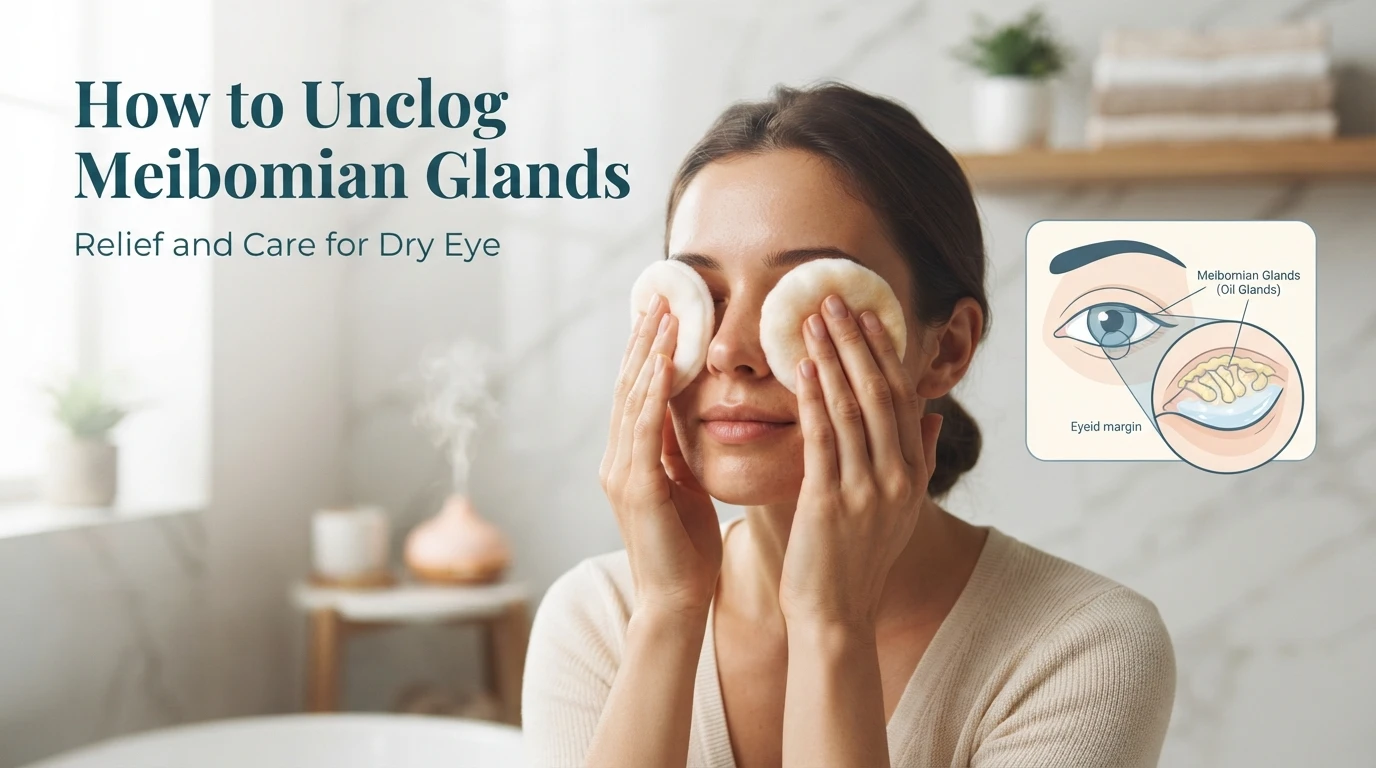
How to unclog meibomian glands: Start with a warm, clean compress over closed eyelids to soften thickened oil, then use gentle eyelid massage and keep the lid margins clean. Do not squeeze the glands forcefully. If symptoms persist, worsen, or affect vision, an eye-care professional can check for meibomian gland dysfunction and recommend treatment.
Meibomian glands are tiny oil-producing glands in your eyelids. They release meibum, an oily substance that helps slow tear evaporation and keeps the tear film stable. When the glands become blocked or their oil becomes abnormal, dry, irritated eyes and other symptoms can develop.
If you are wondering how to unclog meibomian glands, simple eyelid care is often the starting point. Warm compresses, gentle massage, and regular lid hygiene can help improve oil flow. The goal is to loosen thickened oil without putting pressure on the eye or damaging delicate eyelid tissue.
Key Takeaways
Warm compresses can soften thickened meibum and support gland flow.
Gentle eyelid massage may help move oil toward the gland openings.
Clean eyelid margins help remove debris and support good lid hygiene.
Avoid forceful squeezing or harsh heat around the eyes.
Persistent symptoms or vision changes should be evaluated by an eye-care professional.
What Are Meibomian Glands and Why Do They Get Blocked?
What Meibomian Glands Do
Meibomian glands are oil-producing glands located within the eyelids. Their oil forms part of the outer layer of the tear film and helps reduce evaporation. When the glands work properly, the oil can move through small openings along the eyelid margins.
What Happens When They Become Blocked
With obstructive meibomian gland dysfunction, the glands can become blocked and oil may not flow normally. The oil can also become thicker or lower in quality. This can contribute to dry eye symptoms, irritation, redness, blurry vision, or recurring eyelid problems.
Signs Your Meibomian Glands May Be Blocked
Blocked glands do not always cause obvious symptoms. When symptoms are present, they may include:
Dry, gritty, burning, or irritated eyes.
Redness or soreness around the eyelids.
Watery eyes caused by an unstable tear film.
A feeling that something is in the eye.
Blurred or fluctuating vision.
Recurring styes or chalazia.
Crusty or sticky debris around the eyelids.
These symptoms can have other causes too, so symptoms alone cannot confirm that a meibomian gland is blocked.
How to Unclog Meibomian Glands at Home
For mild symptoms, a consistent eyelid-care routine may help soften meibum and support normal gland flow. Keep the pressure gentle and stop if an activity causes pain or irritation.
Start with a warm compress. Close your eyes and place a clean, comfortably warm compress over the eyelids for several minutes. The warmth can help soften thickened oil in the glands.
Gently massage the eyelids. After warming the lids, use very gentle pressure toward the eyelid margin. The aim is to encourage oil movement, not to squeeze the glands.
Clean the eyelid margins. Keep the eyelids and lashes clean to remove debris and support good lid hygiene. Use a product or method recommended for eyelid cleaning if your eyes are sensitive.
Keep the routine consistent. Meibomian gland problems may need ongoing lid care rather than a single treatment. Follow the routine recommended by your eye-care professional if you have one.
Use comfortably warm—not painfully hot—compresses. Do not press hard on the eyeball or aggressively squeeze the eyelids.
What Not to Do When Your Meibomian Glands Are Blocked
Avoid Forceful Squeezing
Do not try to force oil out by squeezing the eyelids aggressively. The glands and surrounding tissues are delicate, and excessive pressure can cause irritation or injury.
Avoid Excessive Heat
A warm compress should feel comfortable. Extremely hot water, heating devices used incorrectly, or prolonged excessive heat can burn or irritate the eyelid skin and eye surface.
Don’t Ignore Persistent or Worsening Symptoms
If home care is not helping, symptoms keep returning, or you develop significant pain or vision changes, arrange an eye examination instead of continuing to treat the problem on your own.
What If Home Treatment Doesn’t Unclog the Glands?
Home care does not work equally well for everyone. The right treatment depends on the cause and severity of the gland dysfunction. An eye-care professional can examine the eyelids, tear film, and gland openings to determine what is happening.
How an Eye-Care Professional Checks for MGD
An eye-care professional may examine the eyelid margins and assess the quality and flow of meibomian gland secretions. In some cases, imaging such as meibography may be used to look at the glands.
Professional Treatments for Blocked Meibomian Glands
Depending on the condition, treatment may include lubricating eye drops, prescription medicines, eyelid treatments, or in-office procedures designed to warm, open, or express blocked glands. Your provider can choose an approach based on your symptoms and examination findings.
How Long Does It Take to Unclog Meibomian Glands?
There is no single time frame for everyone. Some people notice symptom relief with consistent eyelid care, while others have persistent or recurring meibomian gland dysfunction that needs professional treatment.
Because MGD can be a chronic condition, improvement is often about managing the underlying gland problem and maintaining a regular care routine rather than expecting one warm compress to permanently clear a blockage.
When Should You See an Eye Doctor?
Consider seeing an eye-care professional if your symptoms are persistent, worsening, or interfering with daily activities. An examination is especially important when you have significant eye pain, marked redness, or changes in vision.
Sudden eye pain or sudden vision loss needs prompt medical attention rather than home treatment.
Frequently Asked Questions
Can you unclog meibomian glands naturally?
Warm compresses, gentle eyelid massage, and good lid hygiene may support oil flow and relieve symptoms. Persistent blockage may require professional evaluation and treatment.
Do warm compresses unclog meibomian glands?
Warm compresses can soften thickened meibum and are commonly used as part of MGD management. They may not fully clear a persistent blockage in every person.
How often should you use a warm compress for MGD?
The recommended routine can vary by person and severity. Follow your eye-care professional’s instructions, especially if symptoms are persistent or significant.
Can I squeeze my meibomian glands myself?
Do not forcefully squeeze the glands yourself. Gentle massage may be part of home care, but gland expression or probing for persistent blockage should be performed by a trained eye-care professional when appropriate.
How long does it take for blocked meibomian glands to improve?
Improvement varies. Some people respond to consistent eyelid care, while chronic or more advanced MGD may need longer-term management or professional treatment.
Can blocked meibomian glands cause blurry vision?
Yes. MGD can contribute to an unstable tear film, which may cause blurry or fluctuating vision. New or significant vision changes should be evaluated by an eye-care professional.
Does meibomian gland dysfunction go away?
MGD can be a chronic condition for some people. Symptoms may be managed with consistent eyelid care and, when needed, professional treatment.
What happens if blocked meibomian glands are left untreated?
Persistent MGD can contribute to dry eye disease, eyelid inflammation, and problems with the eye surface. An eye-care professional can help identify the cause and appropriate treatment.
Conclusion
Learning how to unclog meibomian glands starts with simple, gentle eyelid care. Warm compresses, light massage, and clean eyelid margins can support healthier oil flow and may ease mild symptoms. Avoid forceful squeezing or excessive heat, and give the routine time to work. If symptoms persist, worsen, or affect your vision, an eye-care professional can check for MGD and recommend the right treatment for your eyes.

I am Eryndor Vale, a seasoned content writer who brings depth, clarity, and creativity to every piece of writing.
I specialize in crafting engaging, well-researched content that connects with readers and delivers real value.
Through my work at textzhub.com, I turn ideas into impactful stories that inform, inspire, and engage.